Choose the flavour direction
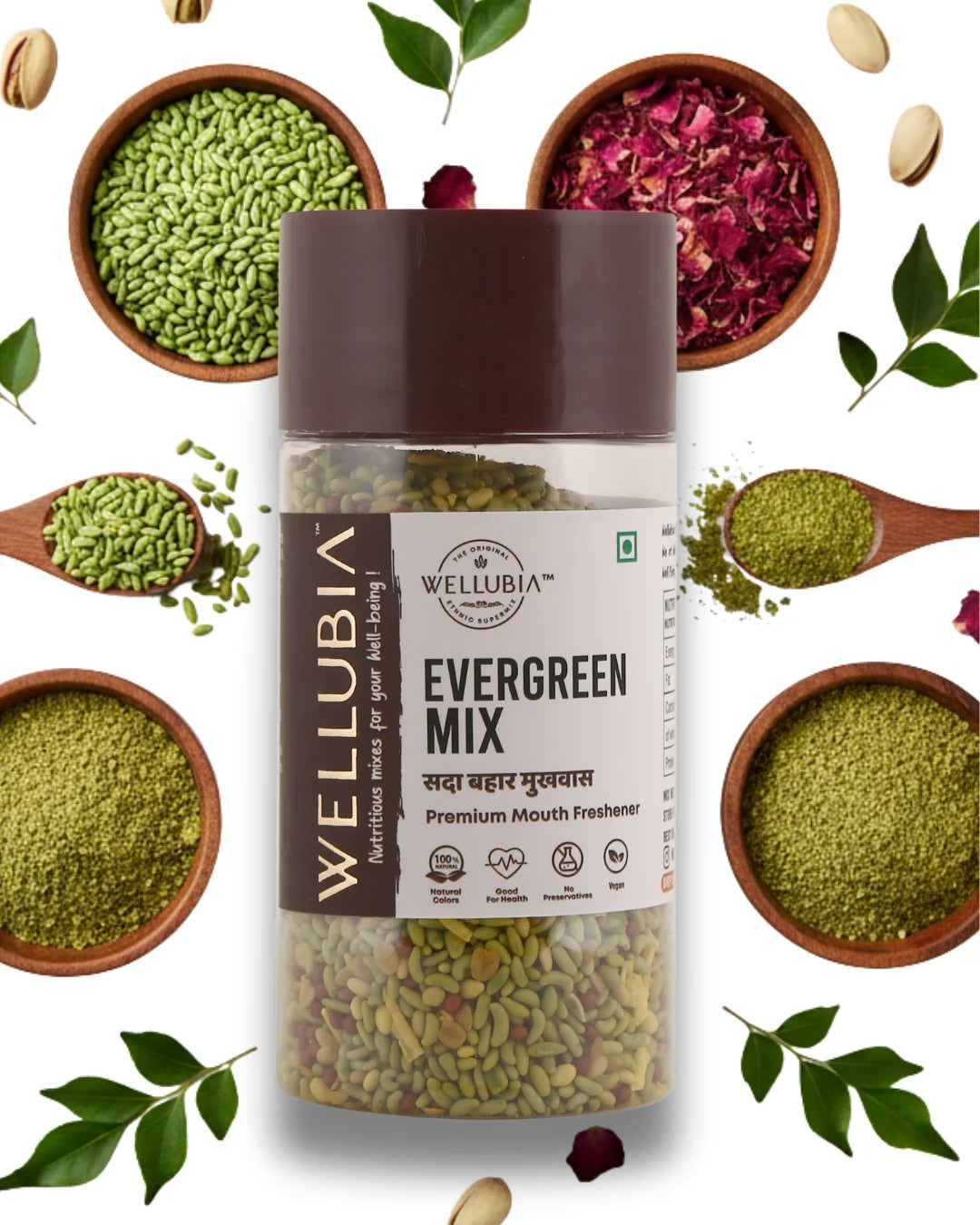
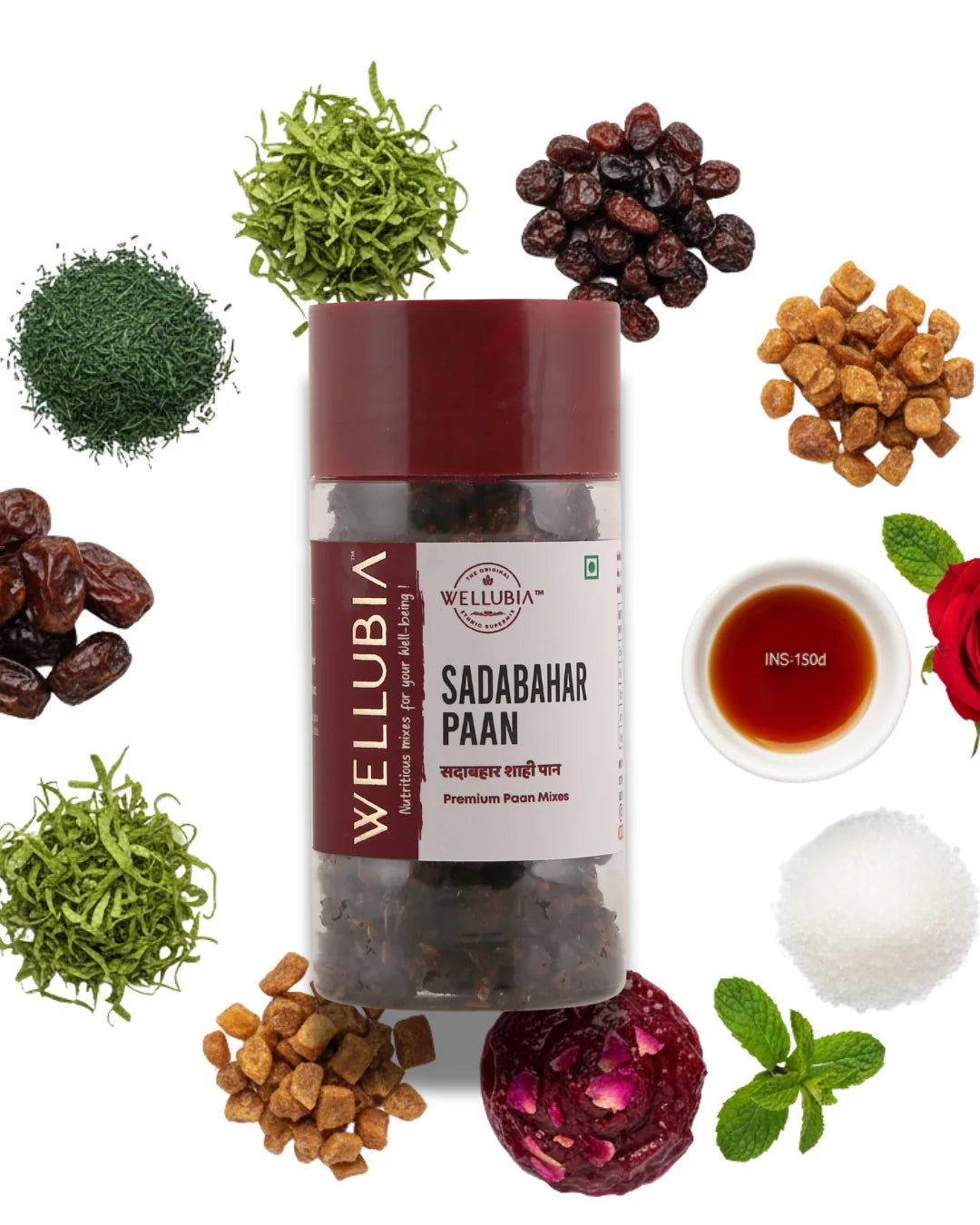
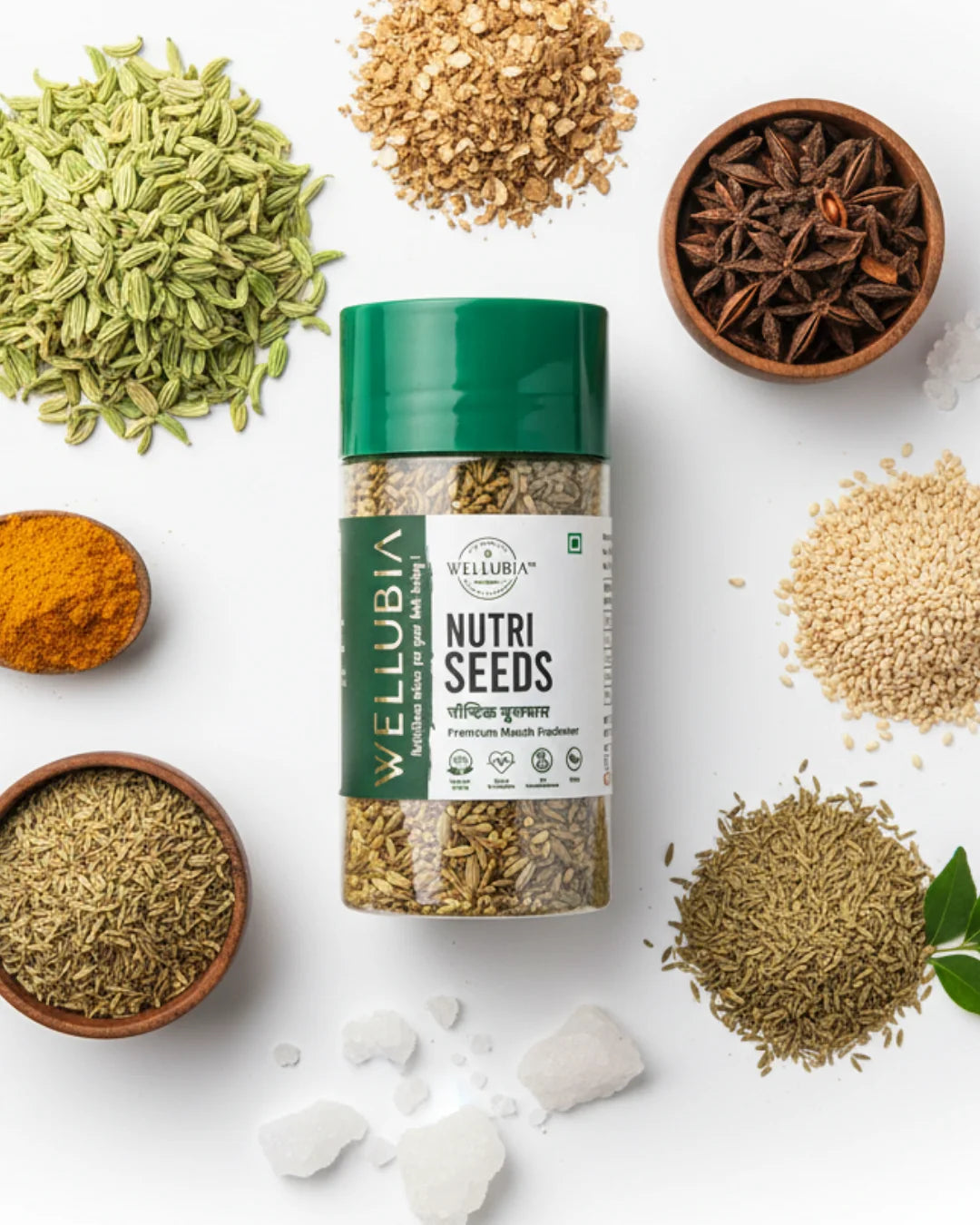
Sweet and floral: look for rose, gulkand, coconut, dates, mishri and paan. Clean and aromatic: start with fennel, cardamom or mint. Sharp and savoury: look for ajwain, cumin, coriander, aamchur and rock salt. Seed-led: choose blends where flax, sesame, pumpkin, amaranth or melon seed remain recognisable.
Check sweetness honestly
Colour and premium packaging do not reveal sugar content. Read the ingredient order and nutrition panel. A sweet blend can be exactly right for a festive table; a lower-sugar seed mix may be better for frequent use. The honest question is not “Is sugar bad?” but “Is this the level and frequency I want?”
Look at texture and freshness
A good mukhwas should feel deliberately textured, not randomly mixed. Fennel should retain aroma, seeds should stay crisp and moist components should not make the whole pack clump. Resealable packaging matters because aroma disappears faster than the product’s printed design.
Match the occasion
- Daily table: familiar flavour, moderate intensity, practical pack.
- Travel: secure closure and a clean, non-messy serving.
- Gifting: ingredient story, presentation and broad appeal.
- Corporate: clear labelling, consistent supply and customisation options.
Check dietary needs
Review allergens including nuts and sesame. Check supari, added colours, sweeteners and any ingredient you avoid. For children, pregnancy, medical conditions or medication concerns, ask an appropriate health professional rather than relying on general marketing copy.
Frequently asked questions
Which mukhwas is best after a heavy meal?
Preference varies. Many people like sharper fennel, cumin, ajwain or sour profiles, but a food product should not be treated as a cure for heaviness or indigestion.
What makes mukhwas premium?
Ingredient quality, clear formulation, balanced flavour, freshness, hygienic production and packaging that protects the blend.