What ajwain tastes like
Ajwain is sharp, warm and thyme-like, with a slight bitterness. It is far more assertive than fennel. In a mukhwas, even a modest amount can turn the finish from sweet to savoury.
Where it fits
Ajwain pairs well with aamchur, cumin, coriander, sesame and rock salt. Sweet ingredients can soften it, but a good formula usually lets its peppery character remain visible. Kathiawadi-style sour blends are a natural place for it.
Traditional use and careful language
Ajwain has a long place in South Asian cooking and domestic food traditions. That history does not make every ajwain product a treatment for indigestion. People with persistent discomfort, reflux, pain or changing symptoms should speak with a health professional.
Buying and storage
Fresh ajwain should smell vivid when rubbed between the fingers. Keep it dry and airtight. Because the seed is strong, stale flavour can register as dusty bitterness rather than pleasant warmth.
Ajwain for digestion in Indian cooking
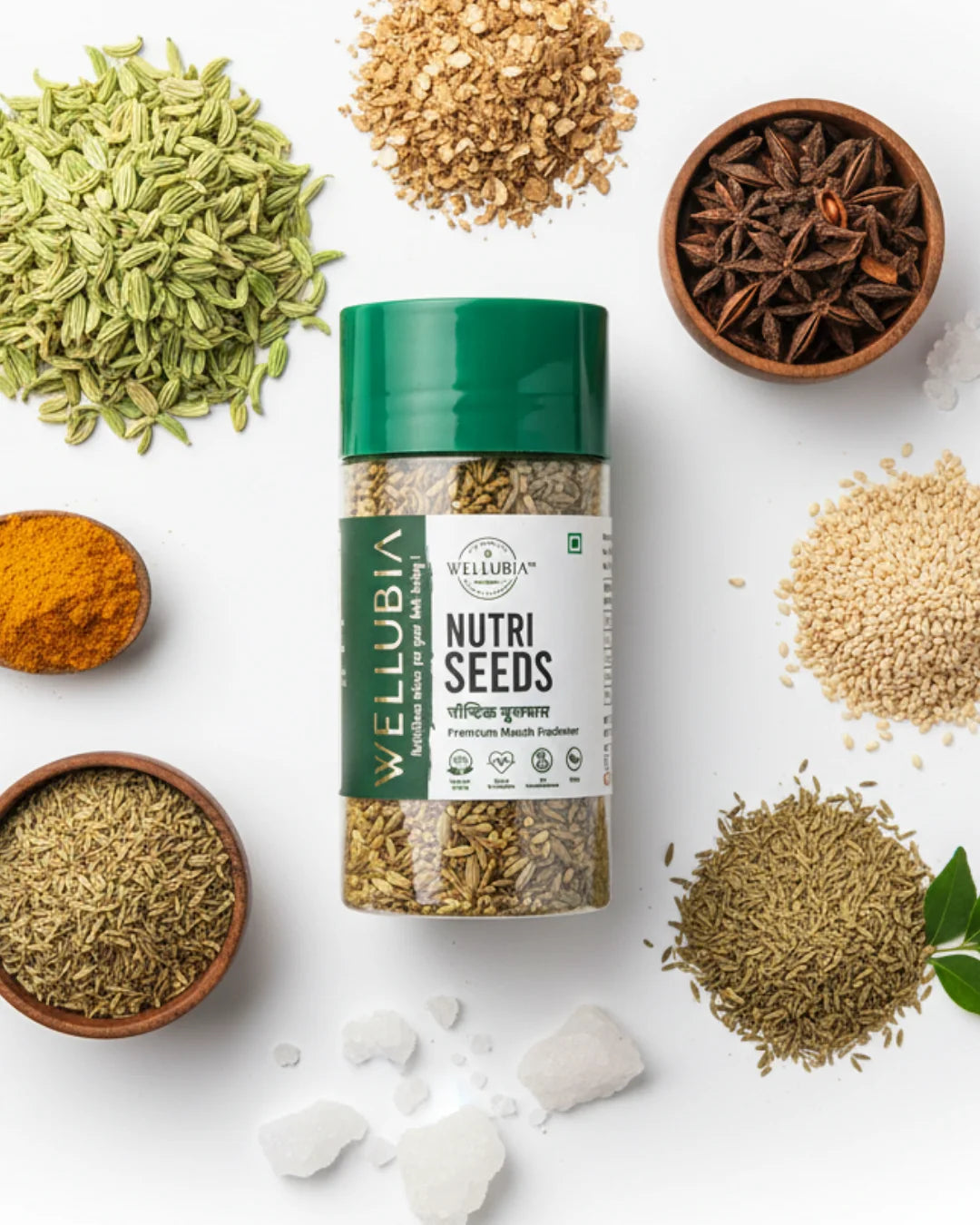
Indian cooks traditionally add ajwain to heavier food: parathas, pakoras, mathri, kadhi and dals made with chana or rajma. It is also steeped as ajwain water after rich meals. These are food traditions rather than treatments. See how to make ajwain water, or taste ajwain by the pinch in Nutri Seeds, one of our roasted seed mixes.
Frequently asked questions
Are ajwain and carom seed the same?
Yes. Ajwain is commonly called carom seed in English.
Is ajwain sweet?
No. It is warm, sharp, herbal and slightly bitter.