What paan means
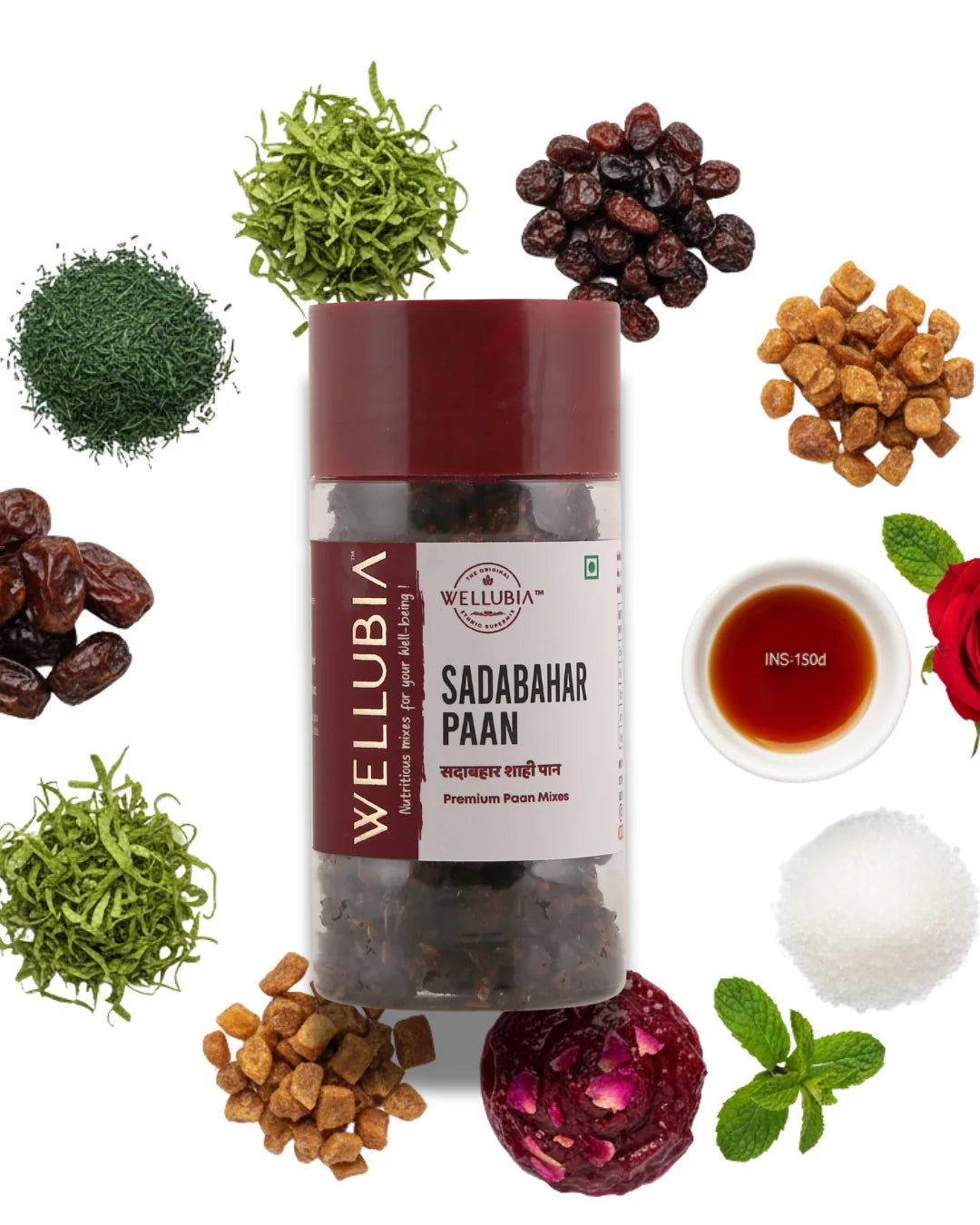
Paan traditionally centres on betel leaf folded around a chosen set of fillings. The contents change by region, shop and preference. Meetha paan may include gulkand, coconut, fennel, cardamom, cherries, dates or other sweet elements.
Paan flavour in mukhwas
A dry mukhwas cannot reproduce the exact texture of a freshly folded leaf. Instead, it translates the aromatic idea through fennel, rose, betel-leaf notes, coconut, dates, cardamom and sweet crystals. The result should be described as a paan-inspired blend rather than fresh paan itself.
Supari-free and label reading
Supari is areca nut. Betel leaf is a separate plant. If avoiding supari matters to you, look for an explicit supari-free statement and read the full ingredients. Do not assume every product called paan contains areca nut, or that every product is free from it.
Choosing a meetha paan blend
Decide whether you want leafy and aromatic, rose-led and sweet, or dry and seed-forward. A premium version should keep individual ingredients recognisable instead of collapsing them into one loud flavour.
Frequently asked questions
Is paan the same as mukhwas?
No. Fresh paan is usually a folded betel leaf with fillings. Paan mukhwas is a dry or semi-dry after-meal blend inspired by some of those flavours.
Does every paan product contain supari?
No. Formulas differ. Check the ingredient declaration and look for a clear supari-free statement when relevant.