The sensory reason
Chewing fennel breaks the seed and releases its sweet, green aroma. The flavour develops gradually and leaves a recognisable finish after rich, spicy or savoury food. This immediate sensory effect helps explain why the habit survives across restaurants and homes.
The social reason
Like mukhwas, saunf extends hospitality by one small gesture. It arrives in a bowl, invites a shared pinch and gives people something to do while conversation continues. The tradition is practical, but it is also social.
Plain, roasted or coated
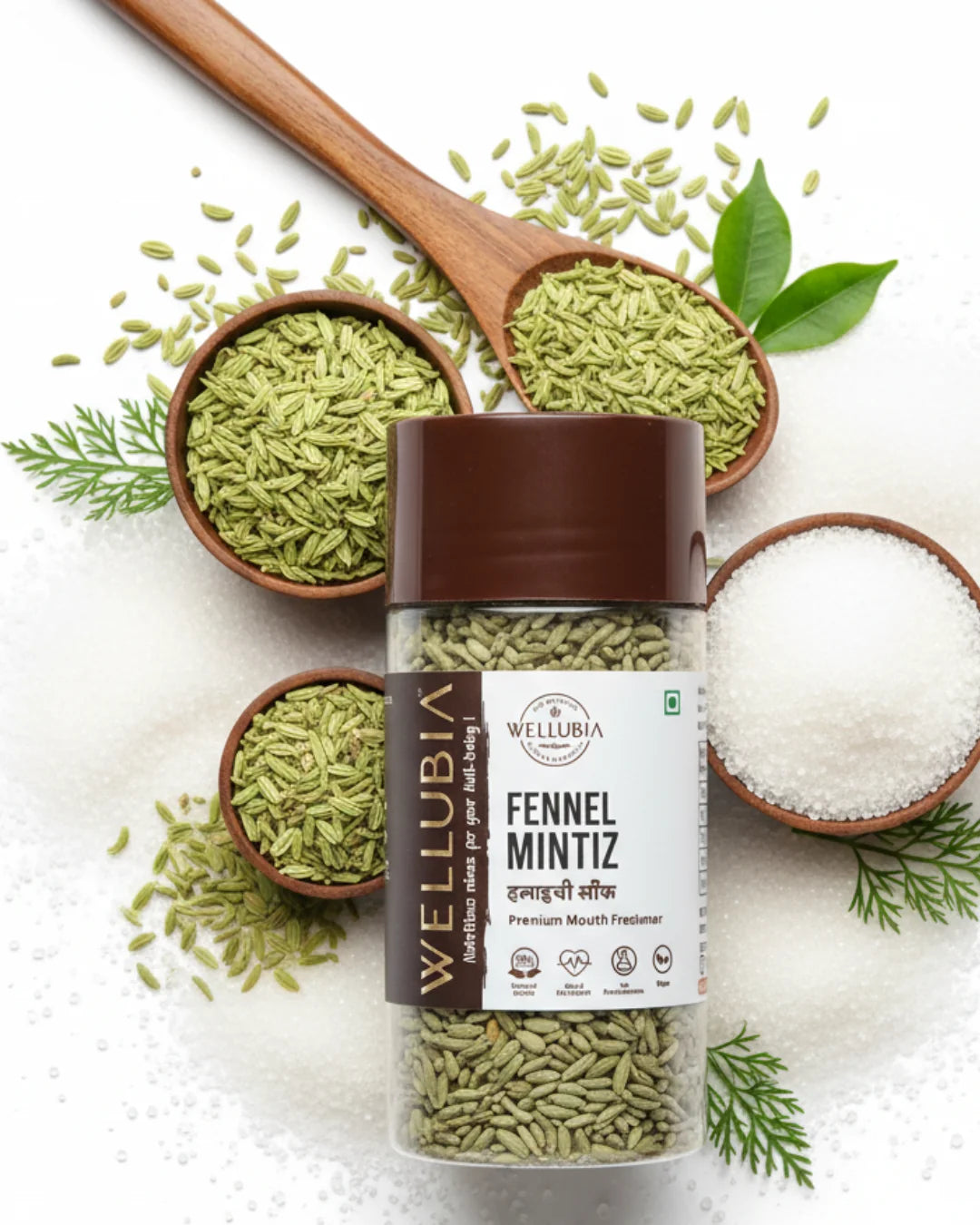
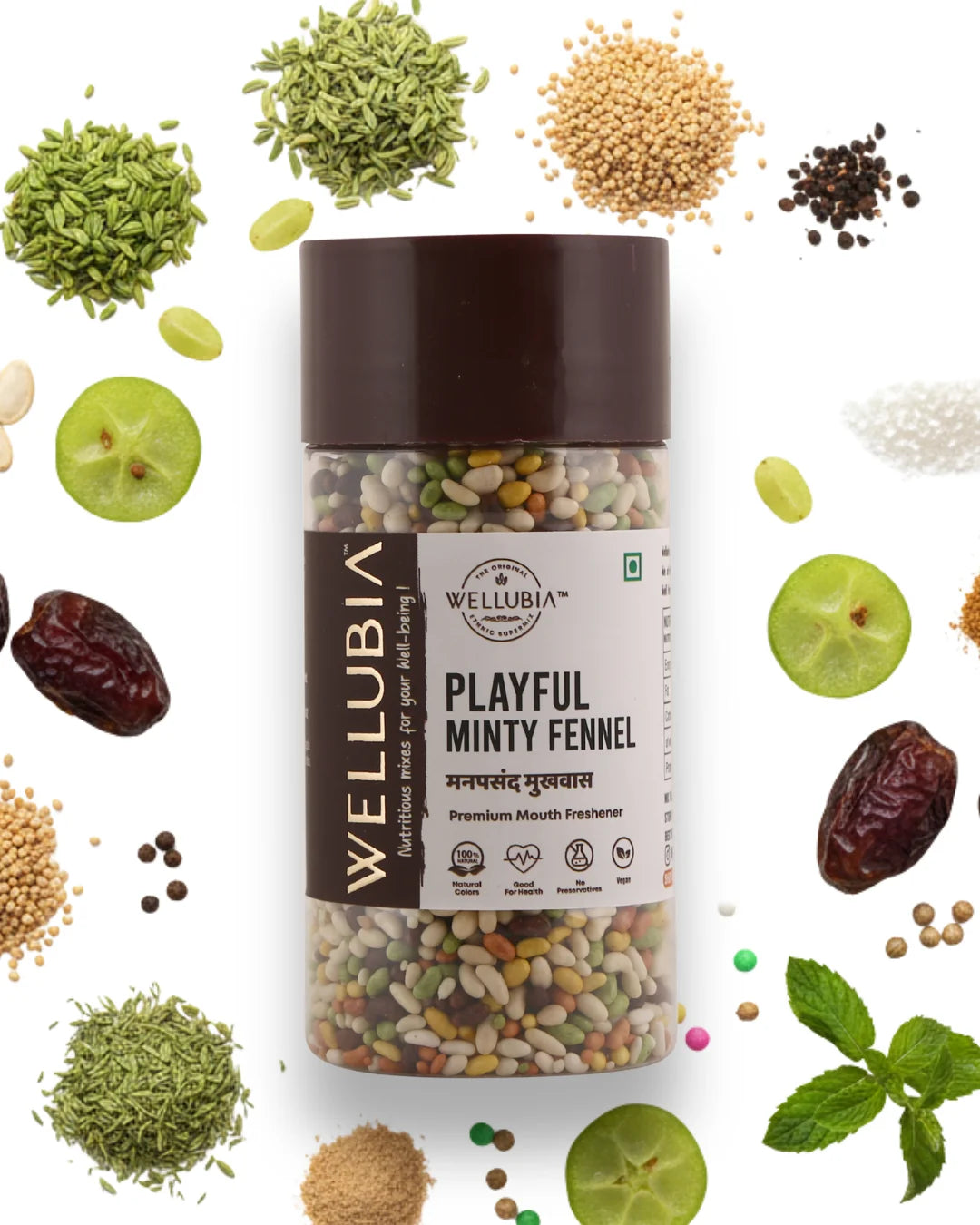
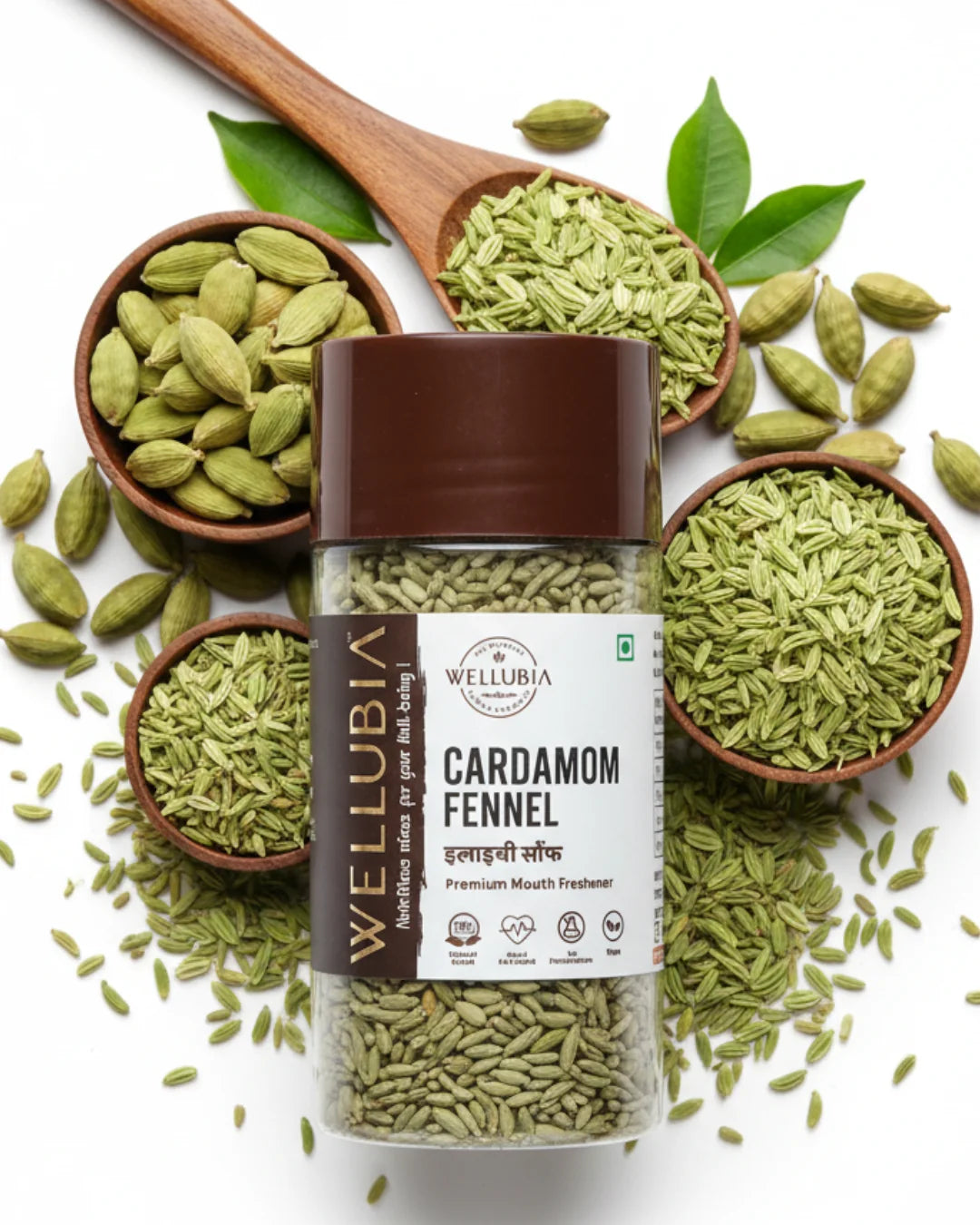
Plain fennel is clean and unsweetened. Roasting makes it warmer. Sugar-coated fennel adds colour, crunch and sweetness. A mixed mukhwas can add sesame, coriander, cardamom, rose, mishri or other ingredients. Read the label if sugar level or additives matter to you.
What evidence can and cannot say
Fennel has been widely studied and has extensive traditional use. However, the evidence for a particular extract or dose does not automatically establish that a small serving of saunf treats indigestion, reflux or bloating. Keep culinary enjoyment separate from treatment.
Frequently asked questions
Is it okay to eat saunf after food?
Fennel is widely used as a culinary seed. Individual allergies, medical needs and product additions vary, so check the specific product and seek professional advice when relevant.
Is coated saunf the same as plain fennel?
No. Coated fennel usually includes sugar, colour or flavour around the seed.